
Artificial intelligence is becoming a part of childhood at a pace many parents may not realize. For kids and teens, AI isn’t just a tool for homework, finding information, or creating pictures. Increasingly, young people are turning to AI chatbots and companions for advice, reassurance and answers to deeply personal questions.
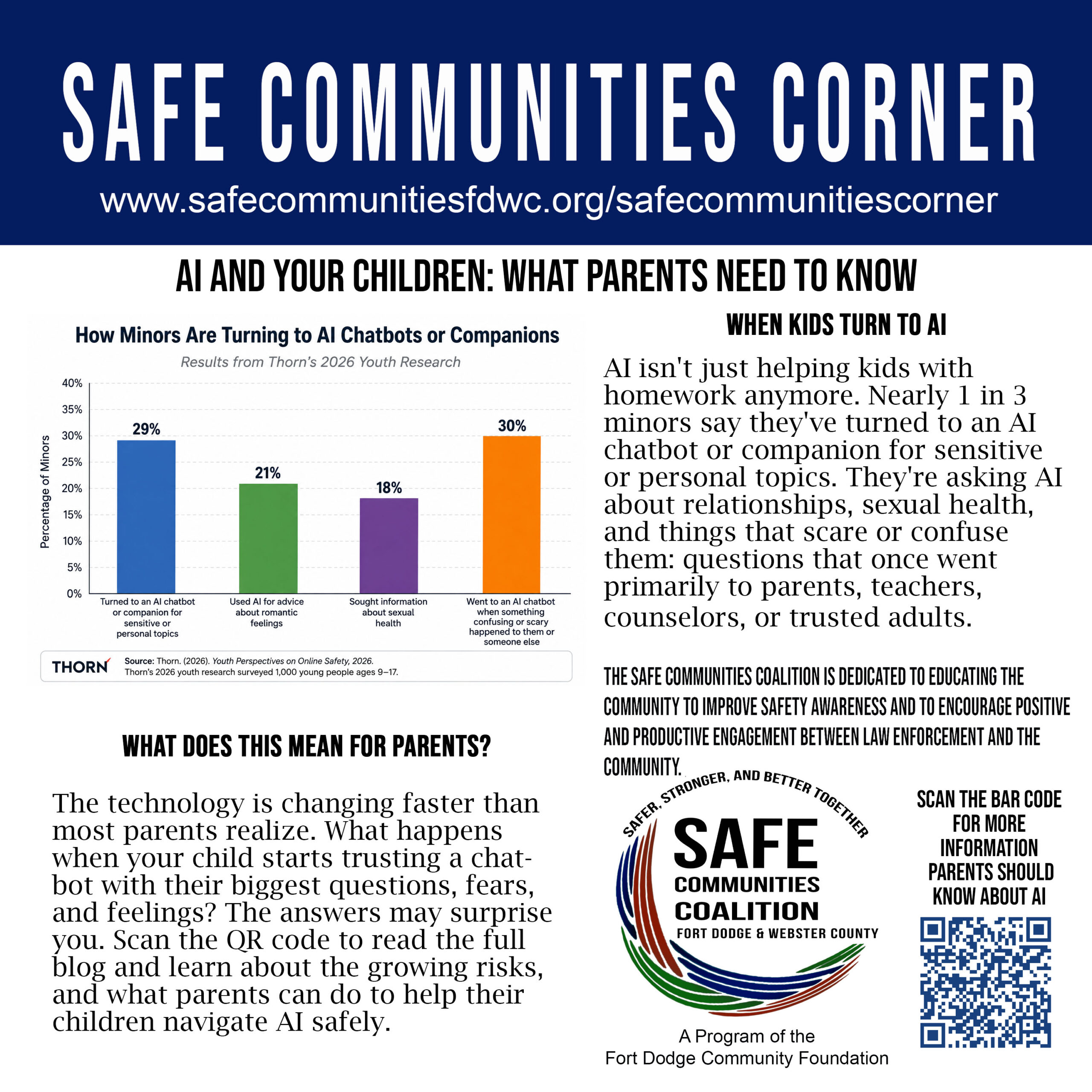
New research from Thorn provides a revealing look at just how quickly this is happening. In its 2025 Youth Perspectives on Online Safety survey, published in July 2026, Thorn surveyed 1,003 U.S. minors ages 9–17. Sixty-seven percent said they had used an AI chatbot or companion. More than 1 in 4—29%—said they had used AI for private or personal reasons.
What young people are turning to AI for
Percent of U.S. minors reporting different personal or sensitive uses of AI chatbots or companions.
0%8%16%24%32%Sensitive or personal topicsSomething confusing or scary
Source: Thorn, Youth Perspectives on Online Safety, 2025; survey of 1,003 U.S. minors ages 9–17, conducted Nov. 12–Dec. 1, 2025.
When AI Becomes the First Place They Go
The numbers are worth paying attention to. Twenty-one percent of minors said they had used AI for advice about romantic feelings, while 18% had sought information about puberty or sexual health. Thirty percent said they had turned to an AI chatbot or companion when something confusing or upsetting happened to them or someone else.
That raises an important question for parents: Why are children turning to a chatbot instead of a person?
AI is available instantly. It doesn’t appear embarrassed. It doesn’t interrupt. A child can ask a question at 2 a.m. without worrying about a parent seeing their face or hearing their voice. For a child who is scared, embarrassed or worried about being judged, that can make AI feel like a safe place to start.
And sometimes, it may be easier for a child to type a difficult question to a screen than to look a parent in the eye and say, “Something happened to me.”
The Problem Is That AI Isn’t a Trusted Adult
The convenience of AI is also what makes this situation concerning.
A chatbot can sound compassionate without actually understanding a child’s life, circumstances or emotional development. It doesn’t know the child’s family, history or vulnerabilities in the way a trusted adult does. And even when an AI provides useful information, children may not have the experience necessary to determine whether the information is accurate, appropriate for their age or missing something important.
Thorn’s research found that AI is already entering situations involving online harm. Among minors who reported experiencing an online sexual interaction, 15% said they sought advice from an AI chatbot or companion afterward—more than twice the 7% who turned to AI after being bullied or made uncomfortable online.
That doesn’t mean AI is inherently bad. In some circumstances, a child may receive helpful information or encouragement to seek assistance. The concern is what happens when AI becomes the first—or only—place a child turns for help.
AI Is Also Creating New Ways for Children to Be Harmed
The same Thorn research found that 1 in 25 teens reported being the victim of an AI-generated deepfake nude, while 7% said they had seen a deepfake nude of another child. Another 13% weren’t sure whether they had seen one.
This is an important reminder that AI isn’t simply something children are using. It is also technology that can be used against them.
A child’s photograph can be manipulated. A fake image can be circulated at school. Someone can use AI to impersonate another person. And increasingly sophisticated technology can make it harder for young people to distinguish what is real from what is fabricated.
For a child, the emotional consequences don’t depend on whether an image is real. Humiliation, fear, bullying and damage to a child’s reputation can be very real.
So What Can Parents Do?
The answer isn’t necessarily to ban AI. AI is becoming part of education, work and everyday life, and children need to learn how to use it responsibly.
Instead, parents should make AI part of the same ongoing conversations they already have about internet safety.
Talk to your child about what they use AI for. Ask what kinds of questions they ask. Explain that AI should never be given private information, passwords, personal identifying details or intimate photographs. Most importantly, make sure your child knows that there is nothing they can tell you that will make you stop loving them or make them “too embarrassed” to ask for help.
That last part matters.
Thorn’s research found that fear of embarrassment and judgment continues to be a significant reason young people don’t disclose harmful online experiences. The organization recommends that caregivers create an environment where children know they can ask for help without fear of punishment, shame or blame.
The Conversation Needs to Start Now
AI is changing the way children learn, communicate and find answers. And the technology isn’t waiting for parents to catch up.
The goal isn’t to make children afraid of AI. It’s to make sure they understand that a chatbot is a tool—not a parent, counselor, best friend or trusted adult.
If your child is scared, confused, being threatened, experiencing sexual pressure, being bullied or dealing with something they don’t understand, AI should never be their only source of help.
Teach them that the safest answer to a difficult question isn’t always another question for a chatbot.
Sometimes, it’s:
“Mom, Dad, I need to tell you something.”