
Don’t Fall for the Dream: How Lottery Scams Are Impacting Iowans
Winning the lottery is something many of us have imagined at one point or another. A surprise windfall, financial freedom, and the ability to help loved ones—it’s an exciting thought. Unfortunately, scammers know this too, and they use that dream to take advantage of unsuspecting individuals.
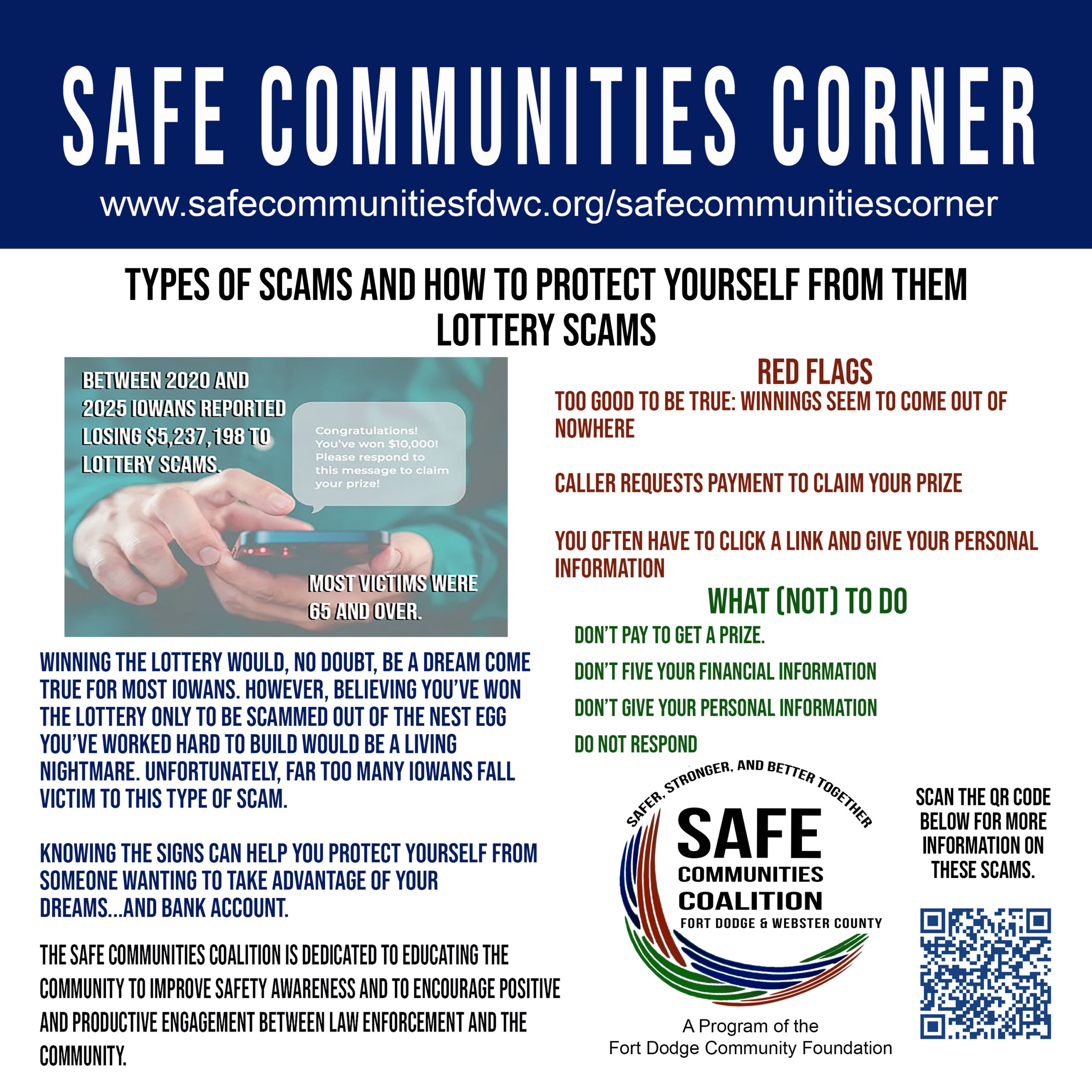
Between 2020 and 2025, Iowans reported losing over $5.2 million to lottery scams, with the majority of victims being age 65 and older. These scams are not just numbers—they represent real people, real savings, and real hardship.
How Lottery Scams Work
Lottery scams are designed to feel exciting and urgent. You may receive a phone call, text message, email, or even a social media message claiming that you’ve won a large prize. The message often looks official and may even include fake logos or documents to appear legitimate.
But there’s a catch—there always is.
Before you can “claim” your winnings, the scammer will ask you to:
- Pay a fee (for taxes, processing, or delivery)
- Provide personal or financial information
- Click a link and enter sensitive details
In reality, there is no prize. Once you send money or share information, it’s often gone for good.
Red Flags to Watch For
Understanding the warning signs is one of the most powerful ways to protect yourself and your loved ones.
1. It seems too good to be true
If you didn’t enter a lottery, you didn’t win one. Legitimate lotteries do not randomly select winners who never participated.
2. You’re asked to pay to claim a prize
This is one of the biggest red flags. Real lotteries deduct taxes from winnings—they don’t require upfront payments.
3. Requests for personal information
Scammers often try to collect Social Security numbers, bank account details, or passwords under the guise of “verification.”
4. Pressure to act quickly
Scammers create urgency so you don’t have time to think or verify the claim.
What You Should (and Shouldn’t) Do
If you receive a message about a lottery win, take a moment to pause and evaluate before responding.
Do NOT:
- Send money to claim a prize
- Share financial or personal information
- Click on suspicious links
- Respond to unsolicited messages
Do:
- Talk to a trusted friend or family member
- Verify the information through official sources
- Report the scam to local authorities or consumer protection agencies
Why Older Adults Are Often Targeted
Scammers frequently target older adults because they are more likely to have savings, own their homes, and be trusting of official-looking communications. Additionally, scammers may assume older individuals are less familiar with digital fraud tactics.
That’s why it’s so important for families and communities to have open conversations about scams. A simple discussion can prevent a devastating loss.
Building a Safer Community Together
The Safe Communities Coalition of Fort Dodge and Webster County is committed to raising awareness and helping residents stay informed. Education is one of the most effective tools we have to prevent scams and protect one another.
By learning the signs and sharing this information, you can help stop scams before they start.
Because when it comes to protecting our community, awareness isn’t just helpful—it’s essential.