
Social Media and AI: Can You Still Trust What You See?
Artificial intelligence has transformed social media in just a few short years. Every day, millions of AI-generated images and videos are created and shared across platforms like Facebook, TikTok, Instagram, and X. While there is currently no way to determine exactly what percentage of your social media feed is AI-generated, one thing is becoming increasingly clear: the more AI content you watch, the more AI content the algorithms are likely to show you.
Social media platforms are designed to keep you engaged. If you pause to watch an AI-generated video or interact with an AI-created image, the platform assumes that’s what you enjoy and begins recommending more of it. Before long, a substantial portion of your feed may consist of content that never happened and people who don’t even exist.
Where Is AI Most Common?
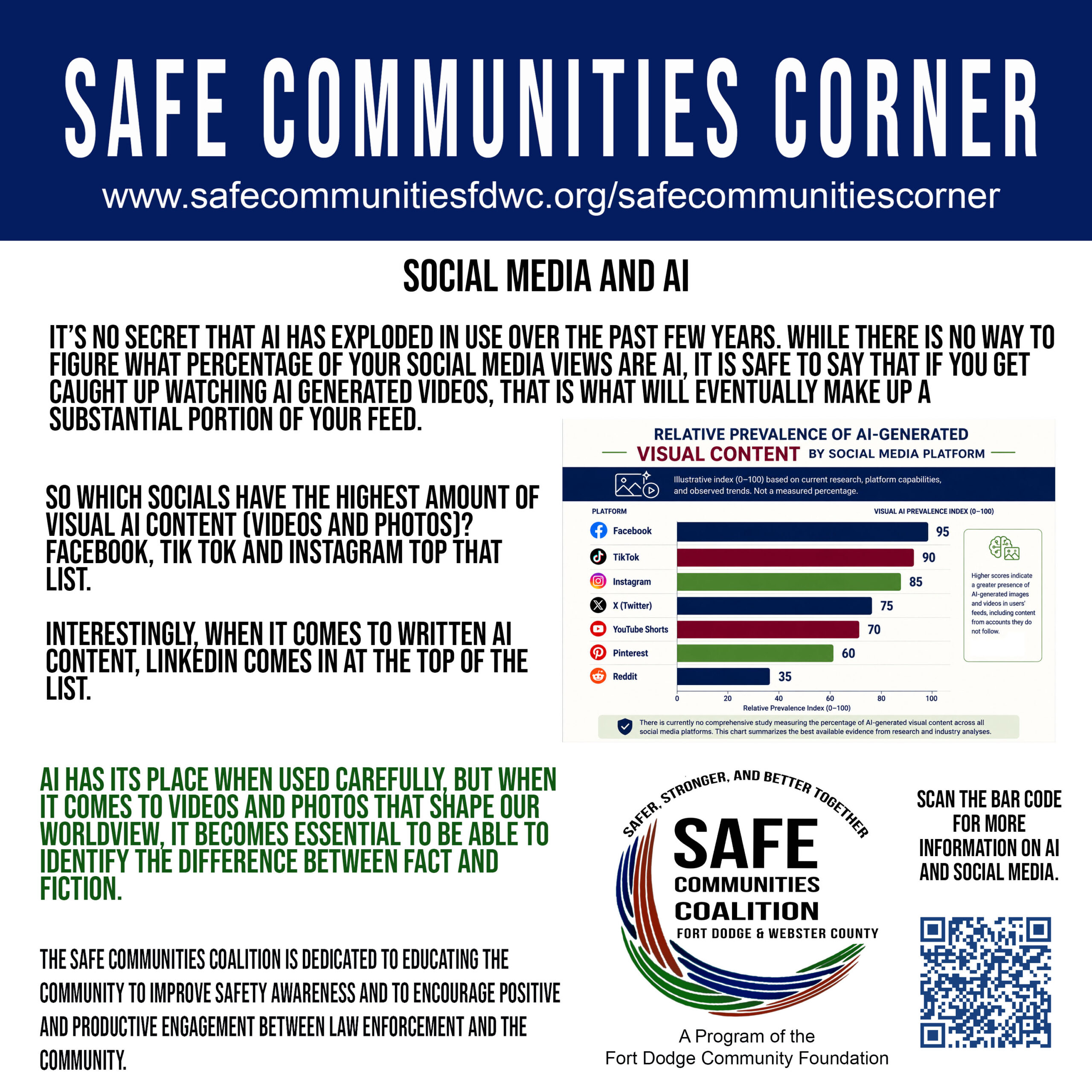
While researchers have not measured the exact percentage of AI-generated visual content on each platform, current research and industry observations suggest that Facebook, TikTok, and Instagram contain the highest levels of AI-generated images and videos.
Interestingly, when it comes to AI-written content, studies suggest that LinkedIn currently leads the way, with AI-assisted posts becoming increasingly common.
The important takeaway isn’t which platform has the most AI, it’s recognizing that every major social media platform is experiencing a rapid increase in AI-generated content.
Why Does It Matter?
The greatest concern isn’t that AI can create convincing fake videos, it’s that repeated exposure can slowly shape how we see the world.
When our feeds become filled with perfect vacations, dramatic rescue stories, unbelievable wildlife encounters, or emotional videos that never actually happened, it can distort our understanding of reality. Over time, we may begin to believe these events are common or authentic simply because we see them repeatedly.
Our worldview isn’t formed by one video. It’s formed by thousands of small moments of information every day.
How to Spot an AI-Generated Video
AI video technology is improving rapidly, but many videos still contain clues that something isn’t real. Before sharing or believing a video, look for these warning signs:
1. Watch the Hands
Hands remain one of AI’s biggest weaknesses. Look for:
- Extra or missing fingers
- Fingers that merge together
- Hands changing shape between frames
- Objects passing through hands
2. Look at Faces Closely
Pay attention to:
- Eyes that don’t blink naturally
- Teeth that appear to change shape
- Lips that don’t perfectly match the speech
- Facial features that subtly shift during the video
3. Check the Background
AI often struggles with background details.
Watch for:
- People appearing or disappearing
- Buildings or objects changing shape
- Signs with unreadable or changing text
- Objects that seem to melt or warp
4. Notice Unnatural Movement
AI-generated motion can look smooth at first glance but often feels unnatural.
Look for:
- Jerky body movements
- Hair moving oddly
- Clothing blending into the body
- Physics that don’t quite make sense
5. Listen Carefully
Many AI videos use synthetic voices.
Warning signs include:
- Flat or emotionless speech
- Strange pauses
- Mispronounced words
- Background sounds that suddenly disappear or change
6. Ask Yourself: Does This Make Sense?
Many viral AI videos are designed to trigger an emotional response.
If you find yourself thinking:
- “That can’t be real.”
- “I’ve never seen anything like that.”
- “This is unbelievable.”
…that’s a good time to stop and verify before sharing.
7. Verify the Source
One of the simplest ways to identify misinformation is to ask:
- Who posted this?
- Is it from a reputable news organization or official source?
- Are other trusted sources reporting the same event?
- Is there any evidence the event actually happened?
If the answer is no, there’s a good chance the content was created primarily to attract views and engagement.
AI Isn’t the Enemy: Blind Trust Is
Artificial intelligence is an incredible tool. It is helping doctors diagnose diseases, scientists discover new medicines, educators create learning materials, and businesses become more efficient.
The challenge comes when AI-generated content is presented as reality without transparency. As AI continues to improve, digital literacy will become one of the most important skills we can teach ourselves and future generations.
The next time you scroll through your social media feed, remember: not everything that looks real actually is. Taking a few extra seconds to question, verify, and think critically can help ensure your understanding of the world is shaped by facts, not fiction.