
Recognizing the Invisible: Understanding Domestic Abuse Beyond the Bruises
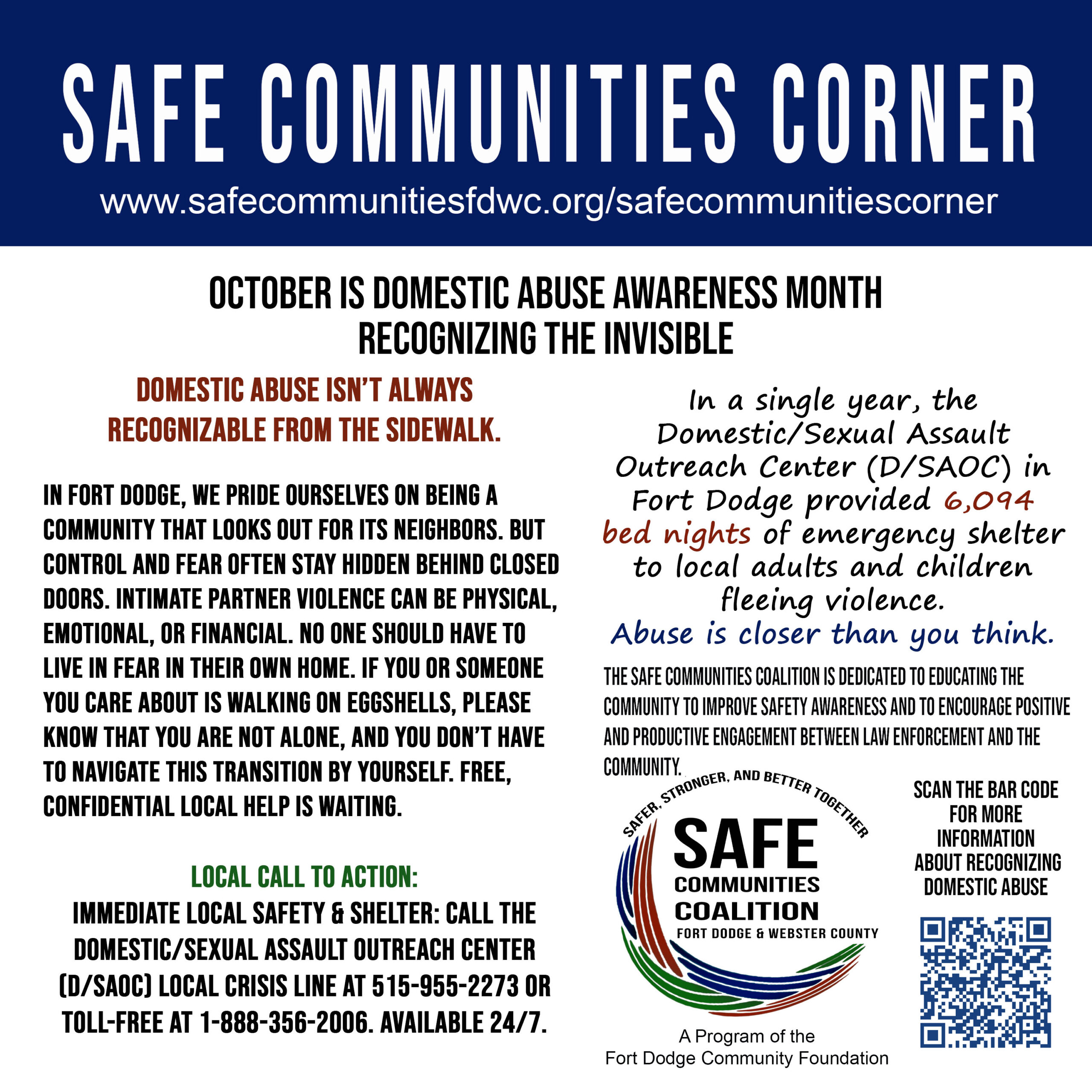
October is Domestic Abuse Awareness Month, a time to recognize the realities of domestic violence, support survivors, and remind our community that abuse is not always easy to see. While physical violence may leave visible injuries, many forms of abuse leave no outward marks at all. Emotional manipulation, intimidation, isolation, and financial control can quietly take hold behind closed doors, often without friends, family members, or neighbors realizing what is happening.
Here in Fort Dodge and throughout Webster County, we take pride in being a community that looks out for one another. But looking out for our neighbors also means understanding that someone experiencing abuse may not feel safe enough to ask for help or share what is happening in their home.
Abuse Isn’t Always What We Think It Is
When we hear the words domestic abuse, many of us picture physical violence. While physical harm is a serious form of abuse, domestic violence can take many forms, and some of the most damaging behaviors may be difficult to recognize from the outside.
Abuse can include:
Emotional abuse: Constant criticism, humiliation, threats, intimidation, or making someone feel worthless.
Financial abuse: Controlling access to money, preventing a partner from working, taking their earnings, or restricting their ability to make financial decisions.
Isolation: Limiting contact with friends and family, monitoring relationships, or making someone feel guilty for spending time with others.
Coercive control: Using fear, manipulation, threats, or constant monitoring to control another person’s choices, movements, and daily life.
Digital abuse: Monitoring phones or social media, demanding passwords, tracking someone’s location, or using technology to threaten or harass a partner.
These behaviors may develop gradually. What begins as jealousy or a desire to know where someone is can become a pattern of control that leaves a person feeling trapped, anxious, and unsure of themselves.
A person experiencing abuse may become withdrawn, seem unusually anxious around their partner, frequently make excuses for someone else’s behavior, or appear to have little control over their own decisions. However, there is no single way a survivor looks or acts. Some people may hide what is happening for years, while others may not immediately recognize their experience as abuse.
The absence of visible injuries does not mean the absence of harm.
Why Leaving Isn’t Always Simple
It can be tempting to ask why someone experiencing abuse doesn’t simply leave. But leaving an abusive relationship is often far more complicated than it appears from the outside.
A survivor may fear that leaving will escalate the violence. They may worry about their children’s safety, lack access to money or transportation, or have nowhere safe to go. Some may face threats involving custody, housing, pets, or their immigration status. Others may still love their partner and hope the situation will improve.
Abuse can also gradually erode a person’s confidence and sense of independence. When someone has been repeatedly told they are incapable, unworthy, or responsible for the abuse, reaching out for help can feel overwhelming.
There is no single timeline for leaving, and every situation is different. Survivors deserve patience, compassion, and the freedom to make decisions based on their own safety and circumstances.
If someone you care about is experiencing abuse, you do not need to have all the answers. Listening without judgment, expressing concern, and helping them connect with trained professionals can make a meaningful difference.
The Need for Local Support Is Real
Domestic violence is not just an issue affecting other communities or people we see in the news. It affects individuals and families right here in our own neighborhoods.
In a single year, the Domestic/Sexual Assault Outreach Center (D/SAOC) in Fort Dodge provided 6,094 bed nights of emergency shelter to local adults and children fleeing violence. Each bed night represents a night of safety and shelter for someone who needed a place to turn.
Behind that number are people making difficult decisions, parents working to protect their children, and individuals taking steps toward a safer future. Emergency shelter provides more than a roof. It can offer a critical opportunity to connect with advocates, explore options, and begin planning for what comes next.
This is why local services matter. Survivors need more than encouragement to leave an unsafe situation. They need access to confidential support, safety planning, shelter, and resources that can help them navigate the challenges ahead.
How Can We Help Someone Experiencing Abuse?
You do not have to be an expert to support a survivor. Small, thoughtful actions can help someone feel less alone.
Listen without judgment. If someone confides in you, believe them and allow them to share at their own pace. Avoid questioning why they stayed or suggesting that they should have handled things differently.
Express concern with compassion. You might say, “I’m concerned about you, and I want you to know I’m here if you need help.” Let them know they deserve to feel safe and respected.
Respect their choices. Pressuring someone to leave before they are ready can increase feelings of isolation and may create additional risks. Encourage them to speak with a trained advocate who can help them consider their options safely.
Offer practical help when appropriate. Depending on the person’s circumstances, help might mean providing a ride, watching children, sharing information about local resources, or simply being available for a conversation. Always consider whether your offer could be discovered by the abusive person.
Protect their privacy. Do not share their story with others without permission. If their phone or online activity may be monitored, ask what method of communication is safest before sending messages or sharing resources.
Most importantly, remember that supporting someone does not mean taking control of their situation. It means helping them regain a sense of safety, dignity, and choice.
Local Help Is Available
If you or someone you care about is experiencing domestic abuse, confidential local support is available through the Domestic/Sexual Assault Outreach Center (D/SAOC) in Fort Dodge.
Local crisis line: 515-955-2273
Toll-free crisis line: 1-888-356-2006
Availability: 24 hours a day, seven days a week.
You do not need to wait until abuse becomes physical or until a situation reaches a crisis point to ask for help. Advocates can help individuals understand their options and explore safety planning based on their unique circumstances.
If you believe someone is in immediate danger, contact 911 when it is safe to do so. If you suspect a device or online account is being monitored, consider reaching out from a safer phone or device.
Building a Safer Community Together
The Safe Communities Coalition of Fort Dodge and Webster County is dedicated to educating our community, increasing safety awareness, and encouraging positive, productive engagement between law enforcement and the community.
Recognizing domestic abuse is part of that work. When we understand that abuse can exist without visible injuries, we become better equipped to recognize concerns, respond with compassion, and connect people with appropriate support.
Domestic abuse thrives in silence and isolation. Awareness helps break that silence. Compassion helps survivors feel seen. And access to local resources can help people take steps toward safety.
This October, let’s look beyond what we can see. Let’s remember that the person who seems withdrawn, the neighbor who rarely has visitors, or the friend who always seems worried may be carrying something we cannot begin to imagine.
Abuse is closer than you think. Help is closer than you think, too.
Together, we can help make Fort Dodge and Webster County safer places for everyone.