
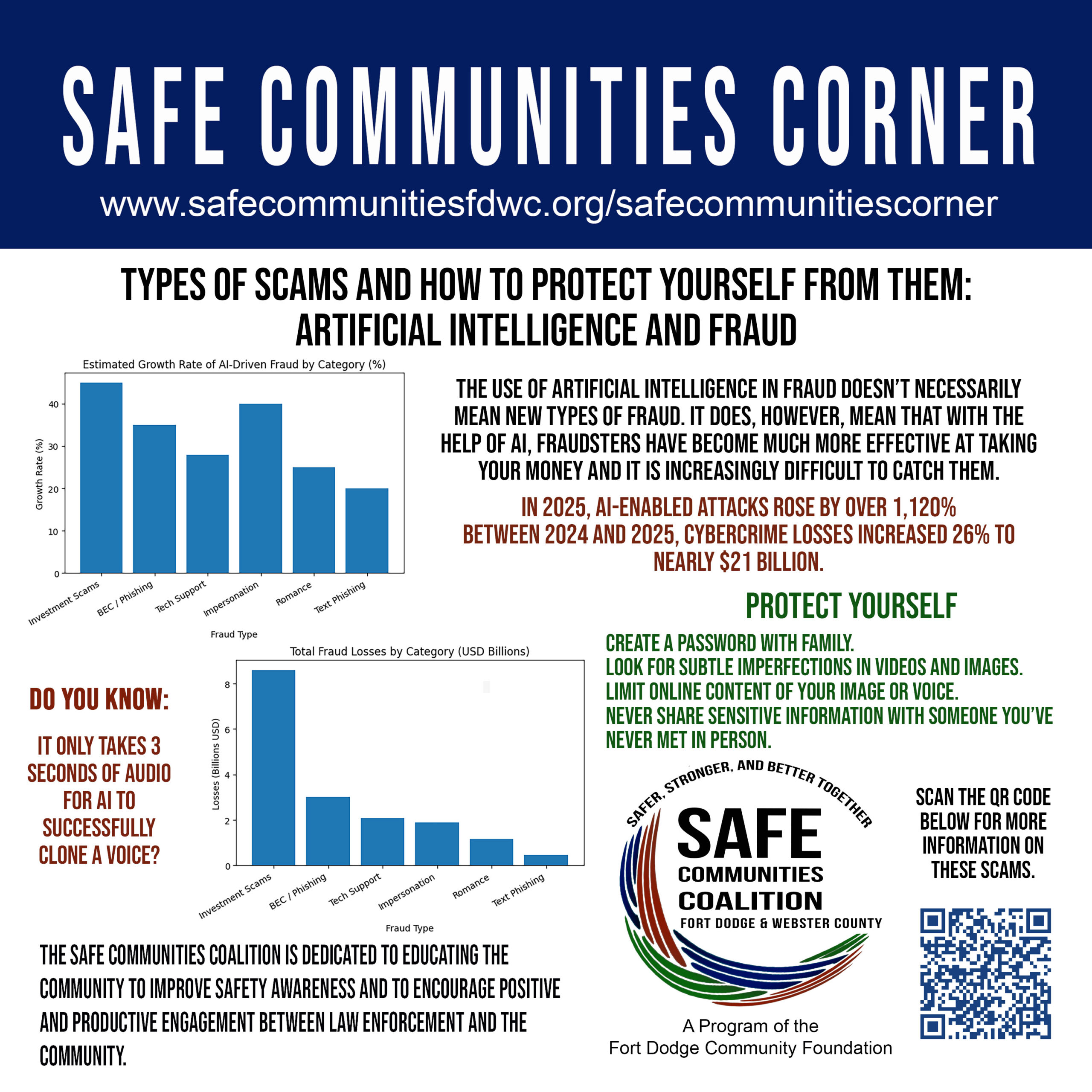
Artificial Intelligence and Fraud: How Scammers Are Using AI and How You Can Protect Yourself
Technology has transformed the way we live, work, and communicate. Unfortunately, it has also transformed the way criminals scam people. Artificial intelligence (AI) is now being used by fraudsters to make scams faster, more convincing, and harder to detect than ever before.
While scams themselves are not new, AI allows criminals to automate deception, imitate real people, and manipulate victims with alarming accuracy. From cloned voices to fake videos and sophisticated phishing messages, AI-enabled fraud is becoming one of the fastest-growing threats facing individuals, businesses, and communities today.
Why AI Makes Fraud More Dangerous
Artificial intelligence gives scammers tools that dramatically increase the effectiveness of traditional fraud schemes. AI can:
- Generate realistic emails and text messages
- Clone voices using only a few seconds of audio
- Create fake images and videos (“deepfakes”)
- Personalize scams using information gathered online
- Automate large-scale attacks targeting thousands of people at once
These technologies make scams appear more believable because they often imitate trusted people, organizations, or situations.
For example, someone may receive:
- A phone call that sounds exactly like a family member asking for emergency money
- A video appearing to show a trusted public figure endorsing an investment
- A text message pretending to be from a bank or employer
- An email with perfect grammar and branding that looks completely legitimate
The goal is always the same: to steal money, personal information, or access to accounts.
Common Types of AI-Enhanced Scams
1. Investment Scams
Investment scams remain one of the most financially damaging forms of fraud. AI tools allow scammers to create convincing fake websites, social media advertisements, testimonials, and even fabricated financial experts.
Fraudsters may:
- Promise guaranteed returns
- Use fake celebrity endorsements
- Show fabricated investment growth charts
- Create AI-generated videos promoting fake opportunities
These scams often pressure victims to act quickly before “missing out.”
Warning Signs
- Guaranteed profits with little or no risk
- Requests for cryptocurrency payments
- Pressure to invest immediately
- Unlicensed or unverifiable companies
2. Business Email Compromise (BEC) and Phishing
AI has made phishing attacks far more sophisticated. Scam emails now sound professional, personalized, and free of obvious spelling or grammar mistakes.
In business settings, criminals may impersonate:
- Executives
- Vendors
- Coworkers
- Human resources departments
They often request:
- Wire transfers
- Gift card purchases
- Payroll changes
- Login credentials
Warning Signs
- Urgent requests involving money
- Slightly altered email addresses
- Unexpected attachments or links
- Requests to bypass normal procedures
3. Tech Support Scams
Scammers use AI chat systems and spoofed phone numbers to convince people their computers or accounts have been compromised.
Victims may see:
- Fake virus alerts
- Pop-up warnings
- Calls claiming to be from technology companies
Once trust is gained, scammers may ask for:
- Remote access to devices
- Credit card payments
- Passwords or personal information
Warning Signs
- Unsolicited tech support calls
- Demands for immediate payment
- Requests for remote computer access
- Claims your device is infected before any diagnosis
4. Impersonation and Voice Cloning
One of the most alarming uses of AI is voice cloning. In some cases, scammers only need a few seconds of audio from social media videos or voicemail greetings to imitate a person’s voice.
Victims may receive calls from someone sounding exactly like:
- A child
- A grandchild
- A coworker
- A friend
The caller may claim:
- They were arrested
- They were in an accident
- They need emergency money immediately
How to Protect Yourself
Create a family password or “safe word” that only trusted family members know. If you receive a suspicious emergency call, ask for the password before taking any action.
5. Romance Scams
AI-generated photos, videos, and messages are helping scammers build fake online relationships faster than ever before.
Scammers may spend weeks or months gaining trust before asking for:
- Money
- Gift cards
- Cryptocurrency
- Financial account access
AI allows criminals to maintain multiple fake identities simultaneously, making romance scams increasingly common and emotionally devastating.
Warning Signs
- Refusal to meet in person
- Constant excuses
- Requests for financial help
- Relationships progressing unusually fast
6. Text Phishing (“Smishing”)
Text scams have become highly personalized using AI-generated messaging.
Examples include:
- Fake delivery notifications
- Banking alerts
- Toll payment requests
- Security warnings
These messages often contain links designed to steal login information or install malware.
Warning Signs
- Unexpected texts requesting immediate action
- Suspicious links
- Requests for account verification
- Messages creating panic or urgency
How to Protect Yourself from AI-Driven Fraud
1. Limit What You Share Online
Scammers collect information from social media profiles, videos, and public posts.
Avoid sharing:
- Personal schedules
- Travel plans
- Financial information
- Excessive voice or video recordings
- Sensitive family details
The less information available publicly, the harder it becomes for scammers to imitate or manipulate you.
2. Verify Before You Trust
Never rely solely on:
- Caller ID
- Email appearance
- Familiar voices
- Video footage
Instead:
- Call the person back using a trusted number
- Contact organizations directly
- Verify requests through separate communication channels
3. Watch for Emotional Manipulation
Scammers succeed by creating:
- Fear
- Urgency
- Excitement
- Sympathy
Pause before acting on emotional requests involving money or personal information.
4. Look Closely at Videos and Images
AI-generated media can still contain subtle imperfections.
Watch for:
- Unnatural blinking
- Odd facial movements
- Audio delays
- Distorted backgrounds
- Unnatural speech patterns
As technology improves, these clues may become harder to spot, making verification even more important.
5. Use Strong Security Practices
Protect accounts by:
- Using strong, unique passwords
- Enabling multi-factor authentication
- Updating devices regularly
- Monitoring financial statements
- Using password managers
6. Talk with Family Members
Education is one of the strongest defenses against fraud.
Discuss:
- Voice-cloning scams
- Emergency verification plans
- Online safety
- Financial fraud warning signs
Older adults, teenagers, and first-time internet users are often heavily targeted.
What To Do If You Suspect a Scam
If you believe you’ve encountered fraud:
- Stop communication immediately
- Do not send money or personal information
- Contact your bank or financial institution
- Change compromised passwords
- Report the incident to local law enforcement or fraud reporting agencies
- Warn friends and family if your accounts may have been compromised
Quick action can reduce financial damage and help prevent others from becoming victims.
Communities Working Together Against Fraud
Public awareness is one of the most effective ways to combat scams. Community organizations, law enforcement agencies, schools, and local leaders all play a role in educating residents about evolving fraud tactics.
Programs focused on community safety and fraud prevention help people:
- Recognize warning signs
- Learn digital safety skills
- Stay informed about emerging threats
- Build stronger connections between residents and local organizations
As AI technology continues to evolve, education and awareness will remain essential tools in protecting individuals and communities from fraud.
Final Thoughts
Artificial intelligence is changing the fraud landscape rapidly. Scammers are becoming more convincing, more organized, and more difficult to identify. However, awareness, verification, and strong digital habits can significantly reduce the risk of becoming a victim.
Remember:
- Slow down before responding to urgent requests
- Verify identities independently
- Protect personal information online
- Use family safety measures like verification passwords
- Stay informed about emerging scams
The best defense against AI-driven fraud is an informed and connected community.