
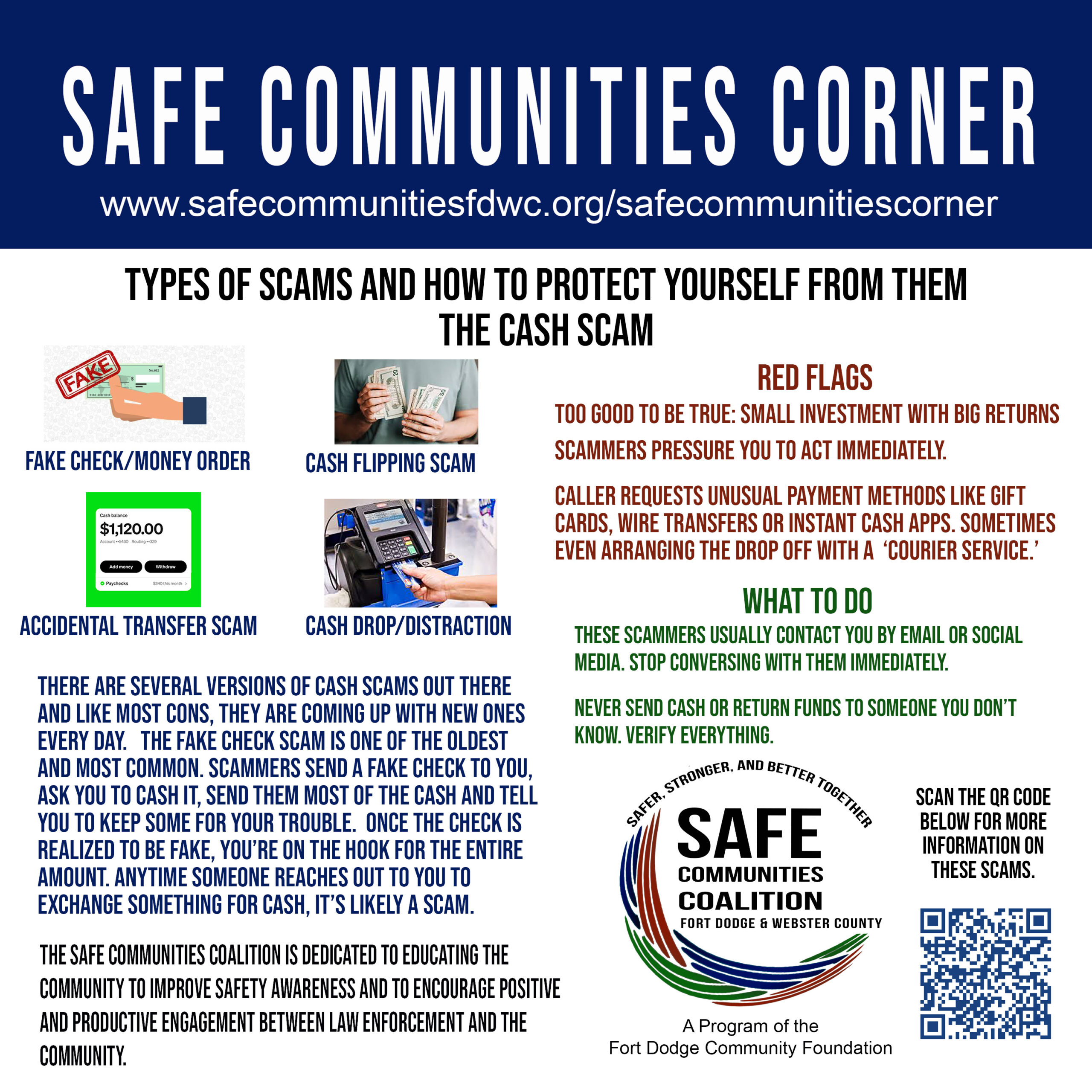
Safe Communities Corner: Understanding Common Cash Scams and How to Protect Yourself
Scammers are becoming increasingly creative, using everyday financial interactions to trick people into sending money or sharing sensitive information. While these scams can look very different on the surface, they all rely on one thing: urgency and trust. Understanding how they work is the first step in protecting yourself and your community.
Below, we break down some of the most common cash scams highlighted in this graphic and explain how they typically unfold—along with practical tips to stay safe.
Fake Check / Money Order Scams
This scam often begins with what looks like good news—perhaps you’ve “won” a prize, landed a job, or sold something online. It could be that you’ve even reached out to an online site about getting a cash advance to get you through until payday. (Scammer’s websites are common and are usually one of the first links you see under the ‘advertised’ list of a Google search.) You’re sent a check or money order and asked to deposit it, then quickly send a portion of the money back for fees, supplies, or processing costs.
Here’s the catch: the check is fake.
Banks may initially make funds available, giving the illusion that the check cleared. But days or even weeks later, the bank discovers the fraud—and you’re responsible for the full amount withdrawn.
How to protect yourself:
- Never send money back from a check you weren’t expecting
- Be cautious of overpayments or requests to “refund” money
- Verify the source before depositing any check
Cash Flipping Scams
Cash flipping scams thrive on social media platforms, where scammers promise to “flip” your money—turning a small investment into a large payout in a short time.
They often use flashy posts, fake testimonials, and screenshots of supposed earnings to appear legitimate. Once you send money (usually through apps like Cash App, Venmo, or cryptocurrency), the scammer disappears.
How to protect yourself:
- Remember: if it sounds too good to be true, it is
- Avoid sending money to strangers online
- Be skeptical of “guaranteed” returns or fast profits
Accidental Transfer Scams
In this scheme, you receive an unexpected payment—sometimes via a peer-to-peer payment app. Shortly after, someone contacts you claiming it was a mistake and asks you to send the money back.
What you don’t see is that the original payment may have been made using a stolen account or fraudulent funds. When the transaction is reversed, you’re left covering the money you “returned.”
How to protect yourself:
- Do not send money back to strangers directly
- Contact your bank or payment app to report the issue
- Let the platform handle reversals safely
Cash Drop / Distraction Scams
These scams often happen in person and rely on confusion and distraction. One common tactic involves someone “accidentally” dropping cash near you, then involving you in a conversation or dispute about splitting the money.
While you’re distracted, an accomplice may steal your belongings, or you may be pressured into handing over money as part of the scheme.
How to protect yourself:
- Be cautious in unfamiliar or high-traffic areas
- Cover the pinpad when entering pin numbers
- Avoid engaging in suspicious or high-pressure situations
- Keep your belongings secure and stay aware of your surroundings
Recognizing the Red Flags
While these scams differ in execution, they share common warning signs:
- People suddenly in your personal space
- Pressure to act quickly
- Odd conversation
What To Do If You’re Targeted
If you encounter any of these situations:
- Stop communication immediately
- Do not send money or share personal information
- Report the incident to your bank, payment platform, or local authorities
- Warn others—spreading awareness helps prevent future scams
Building a Safer Community
Scams don’t just affect individuals—they impact families, workplaces, and entire communities. By staying informed and sharing knowledge, we can reduce the reach of these schemes and protect those who may be more vulnerable.
A simple conversation could prevent someone from losing thousands of dollars. Stay alert, trust your instincts, and when in doubt, pause and verify.
Together, we can keep our community safe.