
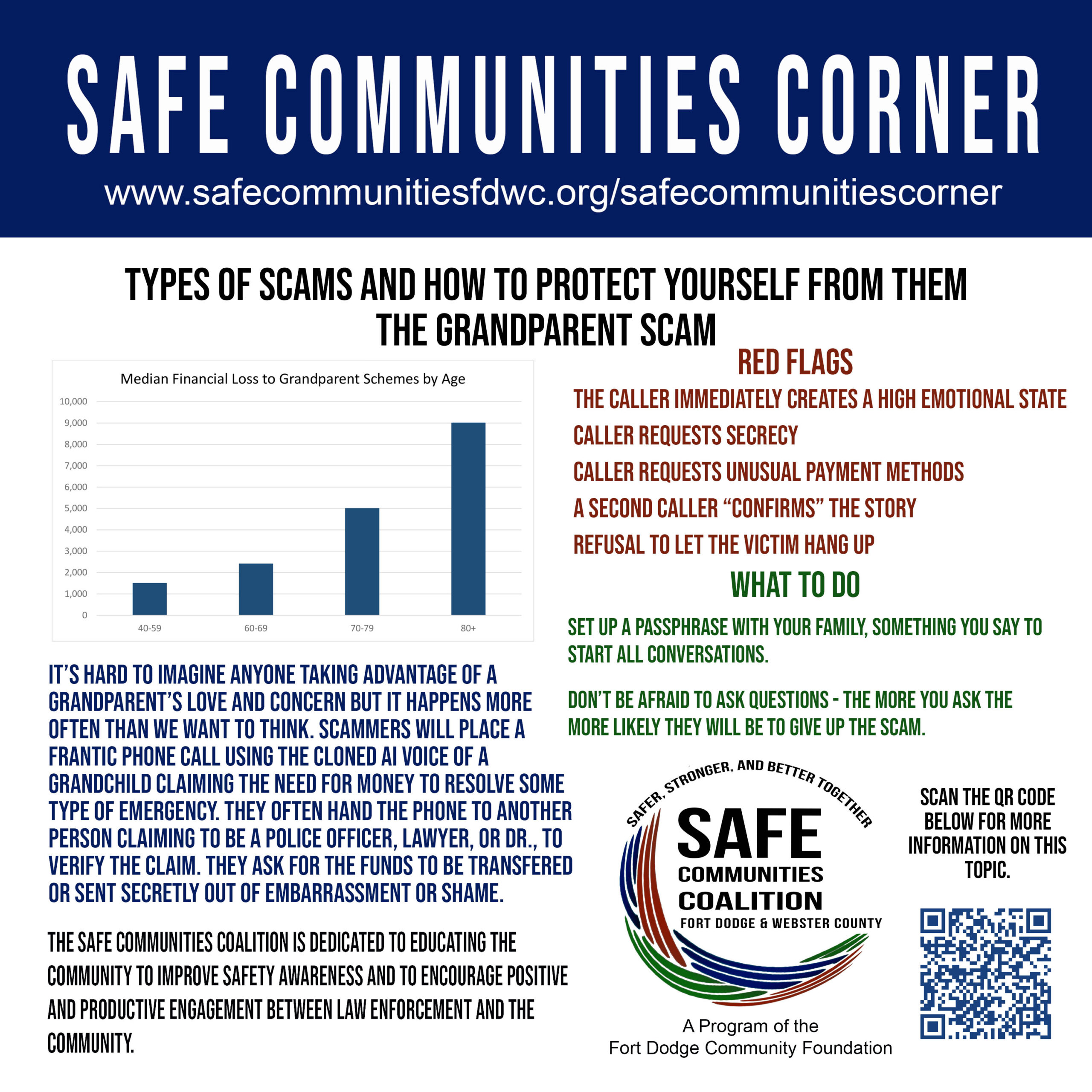
Safe Communities Corner: Protecting Families from the Grandparent Scam
Scammers have long targeted older adults, but recent technology has made these schemes more convincing—and more dangerous—than ever. One of the fastest-growing fraud tactics is known as the Grandparent Scam, and it exploits one of the strongest human instincts: a grandparent’s desire to help their family in a moment of crisis.
Understanding how this scam works is the first step toward protecting yourself and your loved ones.
What Is the Grandparent Scam?
In a typical grandparent scam, a fraudster calls an older adult pretending to be their grandchild. The caller may claim they’ve been in an accident, arrested, stranded in another country, or facing another urgent emergency.
To make the story believable, scammers often create a sense of panic and urgency. They may say something like:
“Grandma, it’s me… I’m in trouble.”
“Please don’t tell my parents yet.”
“I need money right away.”
Increasingly, criminals are using AI voice cloning technology to mimic a real grandchild’s voice. In some cases, the scammer may even pass the phone to another person posing as a police officer, lawyer, or doctor to “confirm” the story.
The goal is always the same: convince the victim to send money quickly, often through unusual or hard-to-trace payment methods.
Why These Scams Work
Grandparent scams are effective because they rely on emotion rather than logic. When someone believes a loved one is in danger, they often react immediately without stopping to verify the situation.
Scammers intentionally create an intense emotional moment so victims feel pressured to act quickly and secretly.
Unfortunately, financial losses can be significant, particularly for older adults. Data shows that losses tend to increase with age, with victims in their 70s and 80s often experiencing the largest financial impacts.
Red Flags to Watch For
While scammers are getting more sophisticated, there are still warning signs that can help you identify a fraudulent call.
Be cautious if:
The caller immediately creates a high emotional situation
They ask you to keep the situation secret
They request unusual payment methods, such as gift cards, wire transfers, or cryptocurrency
Another person joins the call to “verify” the story
The caller refuses to let you hang up or verify the situation
These tactics are designed to prevent victims from pausing long enough to realize something isn’t right.
How to Protect Yourself and Your Family
Fortunately, there are simple steps families can take to protect themselves from these scams.
Create a Family Passphrase
One of the most effective tools is a family passphrase—a word or phrase only your family knows. If someone calls claiming to be a loved one in trouble, ask for the passphrase before continuing the conversation.
If they can’t provide it, that’s a strong indication the call may be fraudulent.
Ask Questions
Don’t be afraid to slow the conversation down and ask detailed questions. Scammers rely on speed and confusion. The more questions you ask, the harder it becomes for them to keep the story consistent.
Hang Up and Verify
If you receive a suspicious call, hang up and contact the family member directly using a phone number you already have saved. Never rely on the number provided by the caller.
Talk About Scams with Family Members
Open conversations about scams can make a huge difference. When families discuss these risks ahead of time, everyone is better prepared to recognize suspicious situations.
Building a Safer Community Together
The Safe Communities Coalition is committed to helping residents stay informed and protected. Through education and collaboration between law enforcement, community organizations, and local residents, we can reduce the impact of scams in our community.
Fraud prevention starts with awareness—and by sharing information with friends, neighbors, and family members, you can help prevent someone else from becoming a victim.
Together, we can build safer, stronger communities.