
Colder Weather Brings Risk of House Fires
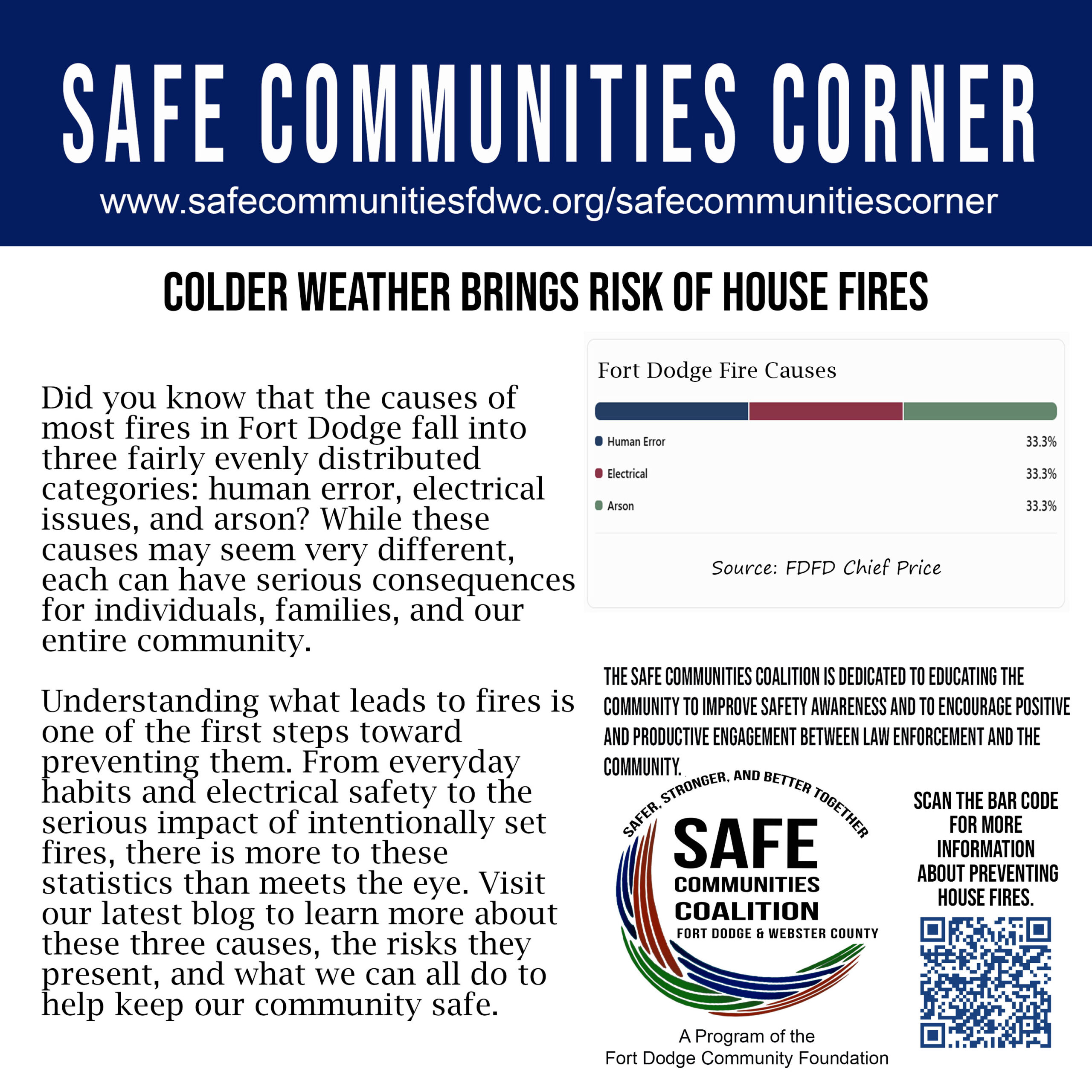
Fire prevention begins with understanding how fires start. In Fort Dodge, the causes of most fires fall into three fairly evenly distributed categories: human error, electrical issues, and arson. Although these causes are very different, they share one thing in common: each can put lives, homes, businesses, and entire neighborhoods at risk.
Understanding these causes helps us recognize everyday hazards, make safer choices, and take steps to protect the people and places we care about.
1. Human Error: Everyday Actions Can Have Serious Consequences
Many fires begin with ordinary activities that we may not think twice about. Cooking, heating, smoking, and using candles are all common parts of daily life, but when they are not handled carefully, they can quickly become dangerous.
Some common examples include:
Unattended cooking: Leaving food cooking on the stove, even briefly, is a leading fire hazard.
Heating equipment: Placing space heaters too close to furniture, curtains, bedding, or other flammable materials.
Smoking materials: Improperly discarded cigarettes or smoking materials that have not been fully extinguished.
Candles: Leaving candles burning unattended or placing them near combustible items.
Fireplaces and outdoor burning: Improper disposal of ashes or allowing fires to burn too close to structures.
Prevention starts with awareness. Stay in the kitchen when cooking, keep anything that can burn at least three feet from heating equipment, extinguish candles before leaving a room, and make sure smoking materials are completely out before disposal.
2. Electrical Issues: Hidden Hazards Behind the Walls
Electrical fires can be especially concerning because the warning signs are not always obvious. Faulty wiring, damaged cords, overloaded outlets, and malfunctioning electrical equipment can all create conditions that lead to a fire.
Some electrical hazards to watch for include:
Overloaded outlets and power strips: Plugging too many devices into one outlet can create excessive heat.
Damaged cords: Frayed, cracked, or worn electrical cords should be replaced rather than ignored.
Faulty wiring: Aging or improperly installed wiring can create dangerous conditions inside walls.
Misused extension cords: Extension cords are intended for temporary use, not as permanent substitutes for properly installed outlets.
Appliances and electronics: Malfunctioning equipment or devices left charging improperly can become fire hazards.
A few simple precautions can make a difference. Avoid overloading outlets, replace damaged cords, use appliances according to manufacturer instructions, and have electrical problems inspected by a qualified electrician. If you notice burning odors, sparks, or frequently tripping breakers, don’t ignore them.
3. Arson: When Fires Are Intentionally Set
Unlike accidental fires, arson involves the intentional setting of a fire. These incidents can have devastating consequences, extending far beyond the property where the fire begins.
An intentionally set fire can threaten neighboring homes and businesses, endanger firefighters and first responders, displace families, and place an enormous emotional and financial burden on victims and the community.
Fire prevention also includes being aware of suspicious activity and taking concerns seriously. If you see someone intentionally setting a fire or notice suspicious activity that could lead to one, contact law enforcement. Never attempt to investigate or intervene in a potentially dangerous situation yourself.
Arson is not simply property damage. It is a serious crime that can put innocent lives at risk.
Fire Prevention Is a Community Responsibility
Whether a fire begins with an everyday mistake, an electrical malfunction, or an intentional act, the consequences can be life-changing. A single fire can leave a family without a home, destroy treasured belongings, disrupt a business, and affect an entire neighborhood.
The good news is that many fire risks can be reduced through awareness and prevention. Make sure your home has working smoke alarms on every level and inside and outside sleeping areas. Test them regularly, develop a family escape plan, and practice what to do if a fire occurs. Everyone in your household should know two ways out of every room and where to meet outside.
Firefighters and first responders work every day to protect our community, but fire safety starts long before an emergency call is made.
A safer Fort Dodge begins with all of us. Take a few minutes to look around your home, identify potential fire hazards, and make the small changes that could prevent a devastating loss. When it comes to fire prevention, awareness today can make all the difference tomorrow.