
Scammers are constantly finding new ways to steal money, and one of the most common methods they use today involves pre-paid cards and gift cards. These scams can happen quickly, feel convincing, and leave victims with little chance of recovering their money. Knowing how these scams work—and how to spot the warning signs—can help protect you and your loved ones.
How Card Scams Work
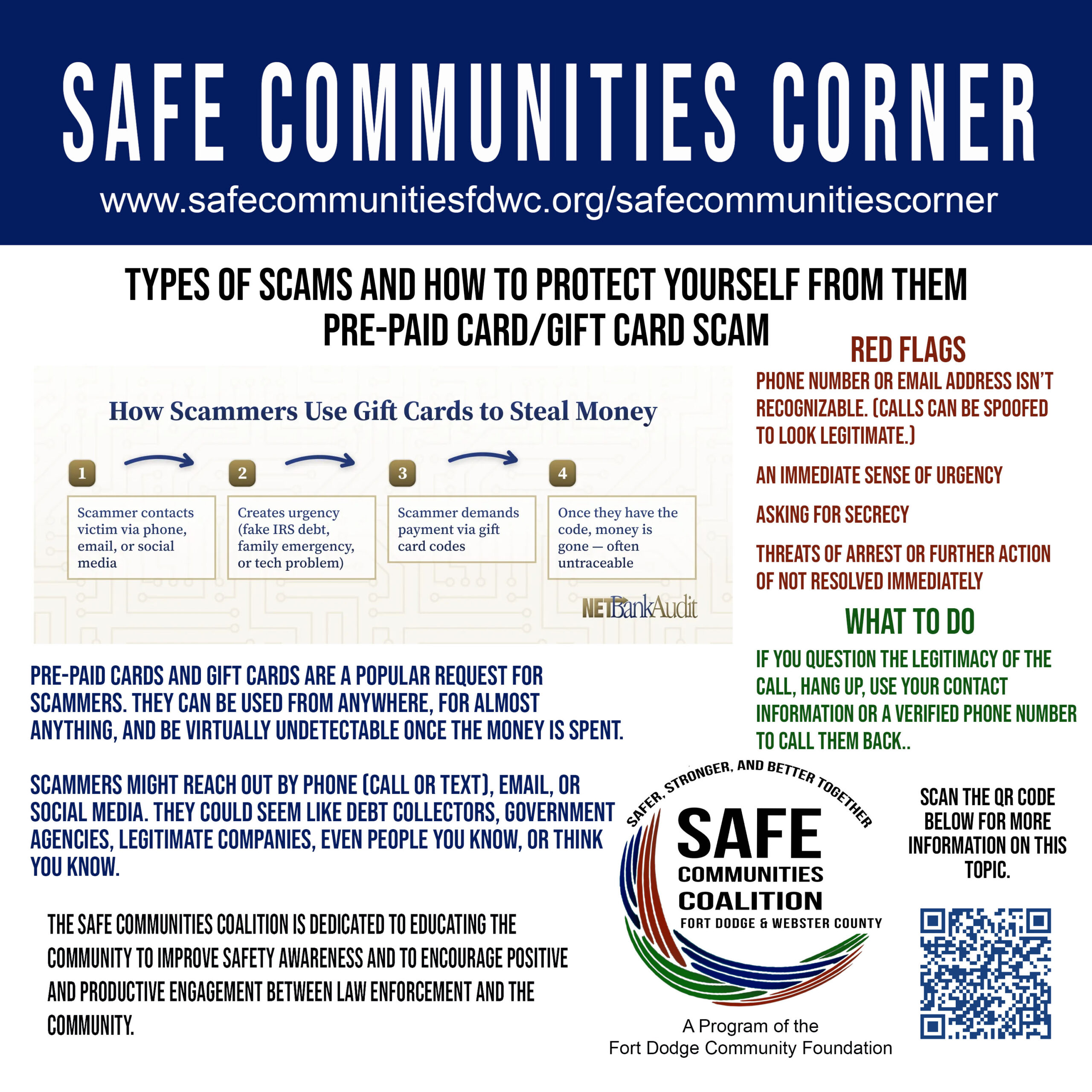
Gift card scams usually follow a predictable pattern:
Initial Contact
A scammer reaches out by phone call, text message, email, or social media. They may pretend to be a government agency, a debt collector, a company you trust, or even someone you know.Creating Urgency
The scammer pressures you with an urgent situation—such as unpaid taxes, a family emergency, a compromised account, or a technical problem that needs immediate action.Demand for Payment
You are instructed to purchase gift cards or pre-paid cards and provide the card numbers or codes as payment.Money Is Gone
Once the code is shared, the money is typically gone for good and is very difficult, if not impossible, to trace.
Because gift cards can be used almost anywhere and from anywhere, they are especially attractive to scammers.
Red Flags to Watch For
Scammers rely on fear and pressure. Be alert if you notice any of the following:
Phone numbers or email addresses that don’t look familiar (caller ID can be spoofed)
A strong sense of urgency or threats demanding immediate action
Requests for secrecy or instructions not to tell anyone
Threats of arrest, fines, or legal action if payment isn’t made right away
Any request for payment using gift cards or pre-paid cards
Legitimate organizations do not ask for payment using gift cards.
What You Should Do
If you ever question whether a call, message, or email is legitimate:
Hang up or stop responding immediately
Use a verified phone number or official contact information to call the organization back
Talk to a trusted family member, friend, or professional before taking action
Report suspected scams to local authorities or consumer protection agencies
Taking a moment to pause can prevent a costly mistake.
Staying Safe Together
The Safe Communities Coalition is committed to educating our community, improving safety awareness, and encouraging positive engagement between residents and law enforcement. By sharing information and staying alert, we can help prevent scams and protect one another.